How Do I Fix Cracks in My Garage Floor Before Coating?
Cracks in a garage floor are extremely common. Concrete shrinks as it cures, shifts with temperature changes, and settles over time. Almost every garage floor develops cracks eventually. The question is not whether to address them before coating but how to address them correctly so the repair holds and the finished floor looks and performs the way it should.
Epoxy Plus Flooring Solutions handles concrete repair and floor coating installations across Michigan and Indiana. Here is what proper crack repair involves and why it matters before any coating goes down.
Why Cracks Must Be Repaired Before Coating
Epoxy and polyurea coatings do not hide cracks. They follow the surface they are applied to. A crack that is not filled before coating will telegraph through the finished surface, creating a visible line in the finished floor. More importantly, an unrepaired crack continues to move with seasonal temperature changes. A coating applied over a moving crack will open and re-crack along the same line regardless of how well the coating itself is installed.
Repairing cracks before coating is not optional. It is a foundational step that determines how the finished floor holds up over time. Epoxy Plus assesses and repairs every crack before any coating installation begins.
Identify What Type of Crack You Are Dealing With
Not all cracks are the same and the right repair method depends on the type. Understanding what you are looking at helps you choose the correct approach.
Hairline cracks are surface-level, typically less than a sixteenth of an inch wide, and caused by normal concrete shrinkage during curing. They do not indicate structural problems and are straightforward to fill. Shrinkage cracks are slightly wider, also caused by curing and drying, and common in garage slabs poured without adequate control joints. Structural cracks are wider, may show vertical displacement where one side of the crack sits higher than the other, and can indicate foundation movement or soil settlement beneath the slab. Active cracks continue to move with temperature and moisture changes and require a flexible repair material rather than a rigid filler.
If you notice significant displacement across a crack or a crack that seems to be growing, a structural assessment before coating is worth pursuing.
Materials for Repairing Garage Floor Cracks
The right repair material depends on whether the crack is active or dormant.
For dormant hairline and shrinkage cracks, a rigid epoxy injection or epoxy filler produces a strong, permanent repair that bonds to the surrounding concrete and accepts coating over it. Rigid fillers are appropriate for cracks that have stopped moving and will not experience further displacement.
For active cracks that move with seasonal temperature changes, a flexible polyurea joint filler is the correct material. Polyurea fillers cure quickly, bond strongly to concrete, and flex with the slab’s natural movement without breaking the repair or allowing the crack to reopen through the finished coating surface.
Using a rigid filler on an active crack produces a repair that looks correct initially but breaks down as the slab moves. Matching the material to the crack type is what makes a repair last.
The Repair Process Step by Step
Proper crack repair follows a consistent process regardless of the specific material being used.
The crack must be cleaned thoroughly before any filler is applied. Loose debris, dust, and contamination inside the crack prevent filler from bonding correctly. A wire brush, vacuum, and compressed air clear the crack channel effectively. Any oil contamination near the crack needs to be degreased before repair.
Wide cracks benefit from being routed or ground to a consistent width and depth before filling. A uniform channel accepts filler more completely and produces a stronger repair than an irregular crack edge.
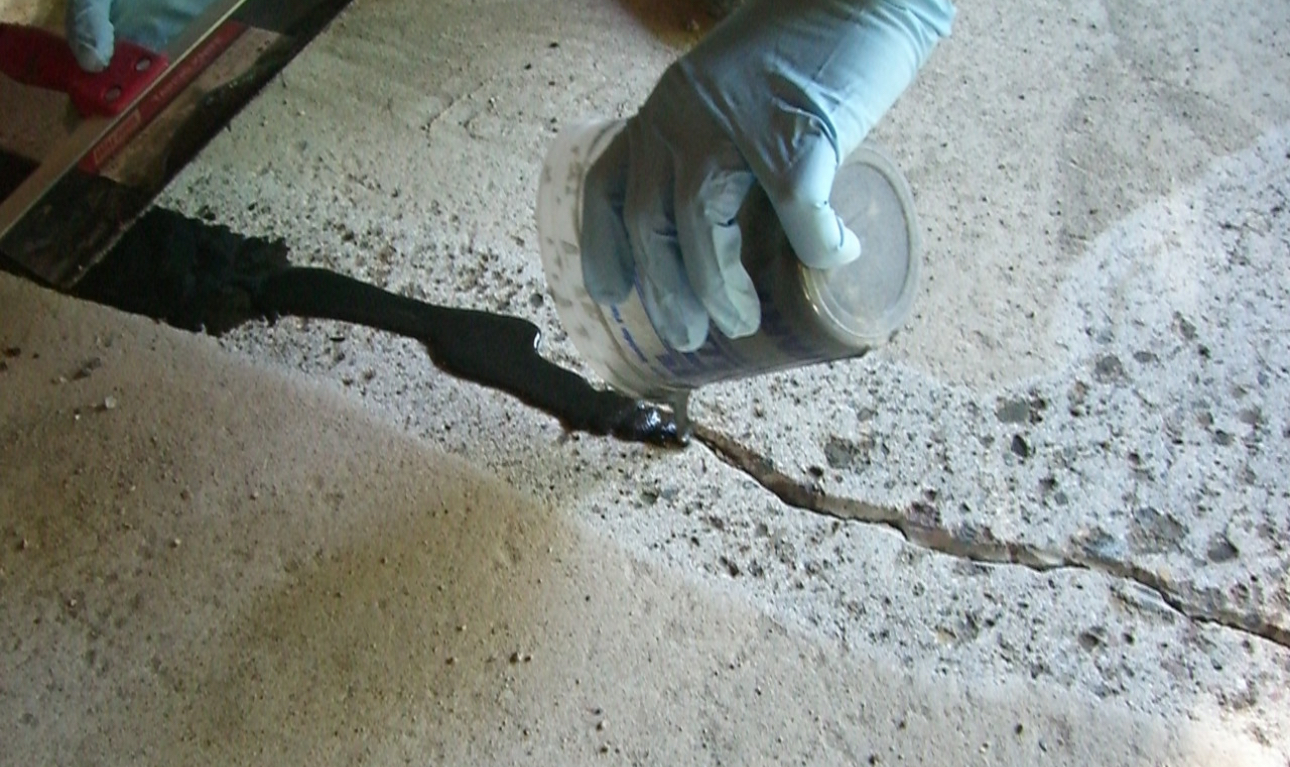
Filler is applied into the crack and worked to the surface level of the surrounding concrete. Overfilling slightly and then grinding flush after curing produces a repair that is level with the slab and ready for coating without any visible ridge or depression at the repair line.
After the repair cures, the entire slab is ground to the appropriate surface profile for the coating system being applied. This grinding step ensures the repaired areas and the surrounding concrete are at the same level and have the same surface texture for consistent coating adhesion across the full floor.
Why Professional Repair Produces Better Results
Consumer crack repair products are available at hardware stores and work adequately for cosmetic fixes on uncoated floors. For floors that will receive a professional coating, the repair needs to meet a higher standard. The material needs to bond correctly to the concrete, accept the coating being applied over it, and hold up under the same conditions as the surrounding slab.
Epoxy Plus uses professional-grade repair materials matched to each crack type and applies them as part of a complete surface preparation process. Every repair is integrated into the full preparation workflow rather than treated as a separate cosmetic step, which produces a finished floor that looks consistent and performs uniformly across the entire surface.
As a Penntek Certified Dealer serving Michigan and Indiana, Epoxy Plus backs every installation with a lifetime warranty. That warranty starts with getting the preparation and repair work right before any coating goes down.
Contact Epoxy Plus today by phone (269) 325-9820 for a free estimate and let us help you choose the right system for your floor. You can also check out all of our Google Reviews and additional services.