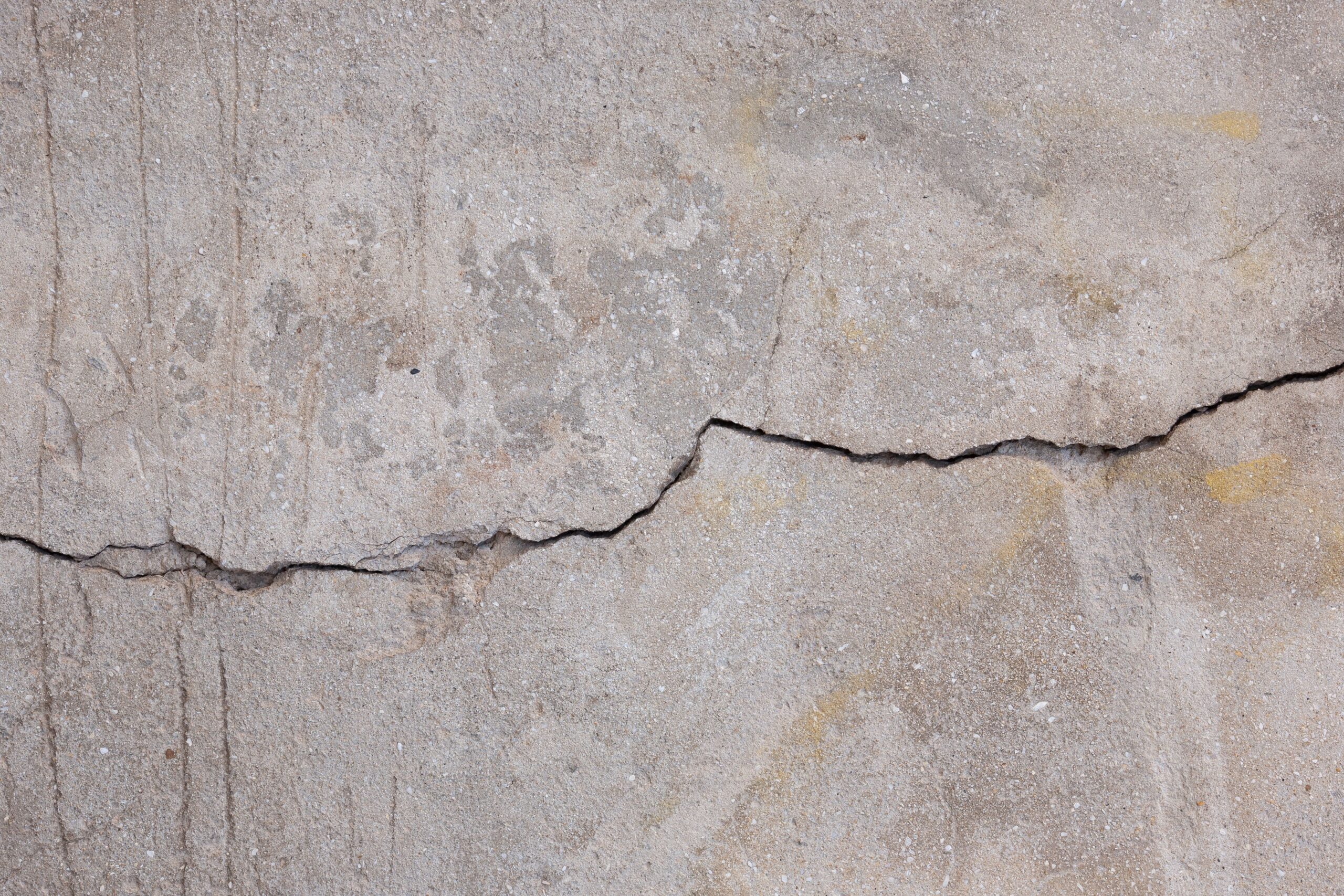
Can You Put Epoxy Flooring Over Cracked Concrete?
It comes up on nearly every estimate, usually while the homeowner is looking at a garage floor they have been apologizing for. Can you put epoxy flooring over cracked concrete, or will a coating just split along the same line in a year?
The answer to whether you can put epoxy flooring over cracked concrete is yes in most cases, but only after the cracks are properly addressed. Coating over an unrepaired crack is one of the more predictable ways to waste money on a floor.
Epoxy Plus Flooring Solutions installs floor coatings across Michigan and Indiana. Here is how cracks get evaluated and handled.
Not All Cracks Are the Same
The first thing an installer does is determine what kind of crack they are looking at, because the repair depends entirely on the cause.
Hairline shrinkage cracks form as concrete cures and loses moisture. They are extremely common, usually cosmetic, and generally the easiest to address.
Control joint cracks occur along the saw cuts intentionally placed in a slab to direct where cracking happens. These are the system working as designed.
Settlement cracks appear when the ground beneath the slab shifts, often leaving one side higher than the other. These need more attention.
Structural cracks are wide, growing, or accompanied by significant vertical displacement. These indicate a problem with the slab or the soil beneath it that a coating cannot solve.
Static Versus Active Cracks
The distinction that matters most is whether the crack is still moving.
A static crack has stopped changing. It formed, it settled, and it has stayed the same for years. These repair reliably and hold up well under a coating.
An active crack is still moving, whether from ongoing settlement, freeze and thaw cycling, or structural stress. A rigid patch over an active crack will eventually fail, because the movement continues regardless of what is on top of it.
Determining which one you have takes an experienced eye and sometimes a conversation about how long the crack has been there and whether it has changed. This is a large part of why an in-person assessment matters more than a phone quote.
How Cracks Get Repaired Before Coating
Proper crack repair is a process rather than a squeeze of caulk.
The crack is first opened and cleaned, often with a saw or grinder, to create a channel with sound edges and to remove loose material and contamination. Filling over a dirty or crumbling crack produces a repair that lets go.
A structural repair material, typically a polyurea or epoxy-based filler formulated for the purpose, is then placed into the prepared channel. These materials are designed to bond to concrete and to cure hard enough to be ground flush.
Once cured, the repair is ground level with the surrounding slab as part of the overall surface preparation. Done correctly, the repaired area accepts coating the same way the rest of the floor does.
Putting Epoxy Flooring Over Cracked Concrete Will Not Hide Everything
This is worth being direct about because expectations cause more dissatisfaction than results do.
A repaired and coated crack is stable and protected. It is not always invisible. Depending on the width, the coating system, and the finish, a faint line may remain visible under certain lighting.
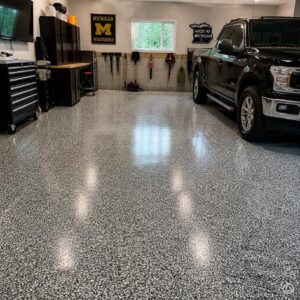
Flake and metallic systems conceal repairs considerably better than solid color systems, because the visual texture breaks up the eye’s ability to track a straight line. A solid color floor is the least forgiving finish for a slab with a history.
If a perfectly uniform appearance is the priority on a slab with significant cracking, that is a conversation worth having before the system is selected rather than after installation.
When a Coating Is Not the Right Answer
On some slabs, the right recommendation is to fix something else before coating anything. Some slabs need repair work that goes beyond crack filling.
Significant vertical displacement, where one side of a crack sits meaningfully higher than the other, may require grinding, leveling, or in some cases slab jacking before a coating makes sense.
Widespread structural cracking suggests a foundation or soil issue that a surface treatment will not resolve. So does a crack that has visibly widened over the past year.
Severe spalling, where the surface is flaking away across large areas, may require resurfacing rather than repair.
A contractor willing to tell you a floor is not ready for coating is worth more than one willing to coat anything.
Why Flexibility Matters in the Winter
Freeze-and-thaw cycling puts concrete through expansion and contraction repeatedly through the winter, and that movement does not stop because a coating went down over it.
This is a practical argument for flexible coating systems in northern climates. A polyurea system can accommodate a degree of slab movement that a rigid coating cannot, which reduces the likelihood of a repaired crack telegraphing through the surface in year three.
It does not make repair unnecessary. It makes the repair more likely to stay invisible.
Get Your Slab Evaluated
Whether your floor is a candidate for coating depends on the specific cracks in it, and that is not something to determine from a photograph. An installer needs to see the crack pattern, check for displacement, and evaluate the overall condition of the slab.
Epoxy Plus Flooring Solutions is a Penntek Certified Dealer providing concrete repair alongside our full range of coating systems across Michigan and Indiana, with every installation backed by a lifetime warranty.
Contact Epoxy Plus today by phone (269) 325-9820 for a free estimate and let us help you choose the right system for your floor. You can also check out all of our Google Reviews and additional services.