How Does Road Salt Damage a Garage Floor?
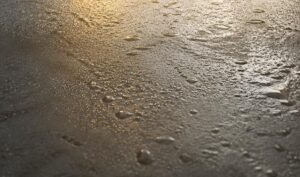
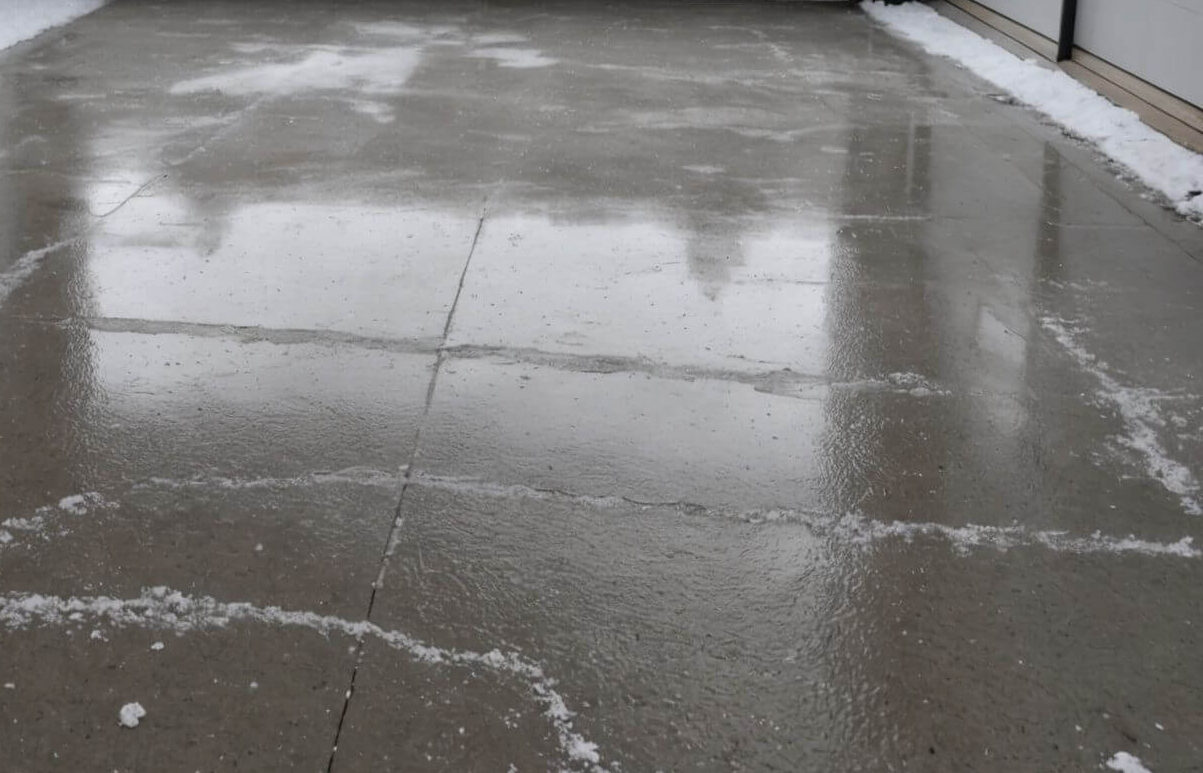
Every winter drive in Michigan or Indiana brings a layer of salty slush into your garage. The slush melts, pools, and soaks into bare concrete. Over several seasons, road salt damage can turn a smooth slab into a rough, flaking surface.
Epoxy Plus Flooring Solutions installs coatings across Michigan and Indiana. Here is what salt does to concrete and how to limit it.
What Road Salt Does to Concrete
Concrete is porous, so water and dissolved salt soak in. When the temperature drops, that water freezes and expands. Warmer weather thaws it again. Repeated cycles stress the surface.
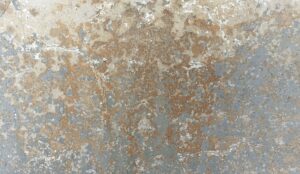
A trade association notes that deicers such as sodium chloride and calcium chloride can amplify freeze-thaw damage. The surface paste then flakes away, a problem called concrete scaling. It often shows up in spring, after the snow and ice melt.
What Road Salt Damage Looks Like
Watch for these signs in your garage:
- White film or crust where slush has dried
- Rough, sandy patches where the top layer wears away
- Small pits and flaking near the car tires
- Dull spots that stay damp longer than the rest of the floor
These signs often start under the tires and near the door. Those areas see the most salty meltwater.
How a Coating Helps Protect the Slab
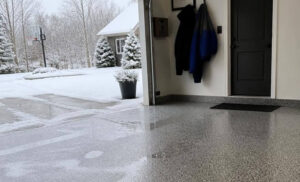
A coating seals the surface. Meltwater sits on top of the floor instead of soaking in. You can squeegee it away and wipe the residue.
A sealed floor still needs care. No coating makes a garage immune to winter. The goal is to keep salty water out of the slab and make cleanup simple.
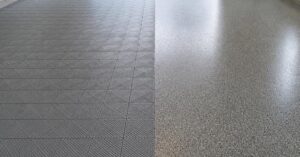
A flake coating adds texture and hides stains, which suits a busy garage.
Choosing a Coating for Salt and Slush
Winter garages put coatings through hard use. They face temperature swings, wet tires, and grit. Choose a system built for that wear.
Many owners look at polyaspartic coating for garages because it is a tough, UV-stable option. Your installer can explain which system fits your floor, your budget, and your climate.
Limit Road Salt Damage This Winter
A few habits make a real difference:
- Squeegee melted slush toward the door after each storm.
- Rinse the floor with water, then dry it.
- Clean up white residue before it builds up.
- Avoid dumping extra salt on your own driveway near the garage door.
Our guide to floor maintenance covers the best cleaning routine.
Repair Before You Coat
A coating does not fix a damaged slab. Scaling, pits, and cracks need attention first. Crews grind the surface and repair weak spots before they install the system.
Read about repair before coating to see when a slab needs work. Booking in the fall puts a protective floor in place before the first heavy salt.
Protect Your Garage Floor Before Winter
The right plan depends on the shape your slab is in. A site visit answers that question quickly.
Epoxy Plus Flooring Solutions is a Penntek Certified Dealer installing flake, solid color, metallic, and polyurea systems across Michigan and Indiana, with every installation backed by a lifetime warranty.
Contact Epoxy Plus today by phone (269) 325-9820 for a free estimate and let us tell you honestly what your floor needs. You can also check out all of our Google Reviews and additional services.