When Does Concrete Need Repair Before Coating?
Concrete repair before coating is not a separate optional service. It is a required step in any professional floor coating installation where the existing concrete has damage that would compromise the bond, performance, or appearance of the finished coating. Skipping or minimizing repair work is one of the most common reasons floor coatings fail before their expected service life.
Epoxy Plus Flooring Solutions assesses and repairs concrete across Michigan and Indiana before every coating installation. Here is a clear guide to the types of concrete damage that require repair and what happens when they are left unaddressed.
Cracks of Any Width
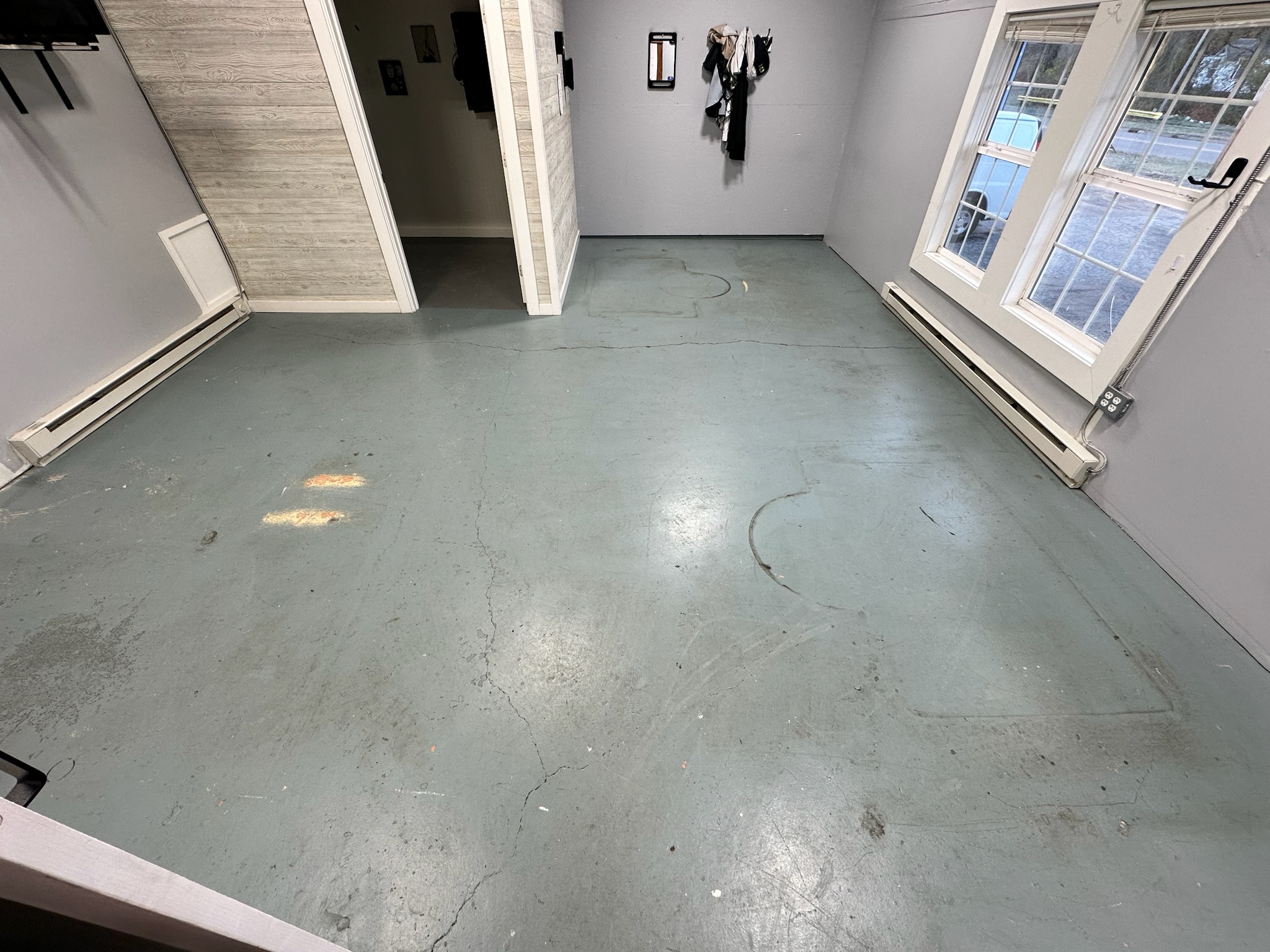
Cracks in concrete require repair before coating regardless of their size. A coating applied over an unrepaired crack does not bridge the gap effectively. The crack remains a weak point in the surface where the coating can lift, peel, or crack along the same line as the concrete beneath it, particularly as the slab moves with seasonal temperature changes.
Hairline cracks, those under a sixteenth of an inch wide, are filled with a rigid epoxy filler that bonds the crack faces together and produces a repair that accepts coating over it without telegraphing through the finished surface. Wider cracks receive a more substantial repair appropriate to their width and depth. Active cracks that continue to move with temperature changes require a flexible polyurea filler rather than a rigid material so the repair can accommodate slab movement without re-opening.
Identifying whether a crack is dormant or active before selecting a repair material is an important part of the assessment process. Epoxy Plus evaluates every crack before beginning repair work.
Spalling and Surface Deterioration
Spalling refers to areas where the surface layer of concrete has broken away, leaving a rough, pitted, or flaking surface. Spalling is caused by freeze-thaw damage, deicing chemical exposure, corrosion of embedded reinforcing steel, or the use of poor-quality concrete mix during original construction.
Spalled areas cannot simply be coated over. The coating bonds to the weakened surface material, which then continues to delaminate from the sound concrete beneath it, taking the coating with it. Spalled areas require the removal of all loose and deteriorated material back to a sound substrate, followed by patching with an appropriate repair mortar or epoxy compound before the surface is ground and coated.
In Michigan and Indiana, freeze-thaw spalling is one of the most common forms of concrete deterioration encountered in garage floors. The combination of water infiltration, road salt tracked in by vehicles, and repeated freeze-thaw cycling through the winter months accelerates surface deterioration in ways that many homeowners do not notice until the floor is being assessed for coating.
Pitting and Pop-Outs
Pitting refers to small holes or depressions in the concrete surface caused by aggregate pop-outs, delamination of the surface layer, or physical impact damage over time. Individual pits may be small, but a surface with widespread pitting produces an uneven bond for the coating and creates areas where the coating layer is thinner and more vulnerable to wear.
Pitting is addressed by filling individual pits with epoxy filler, leveling the repaired areas flush with the surrounding surface, and incorporating the repair into the overall grinding and preparation process so the finished surface is consistent across the entire floor.
Low Spots and Uneven Surfaces
Concrete floors are rarely perfectly flat. Minor variation in flatness is normal and does not require correction before coating. More significant low spots, areas where the floor dips noticeably below the surrounding surface level, can cause pooling of liquids on the finished floor and create an uneven appearance in the coating.
Significant low spots are addressed with self-leveling epoxy compounds that flow into and fill the depression, curing to a level surface that integrates with the surrounding concrete. This type of repair is evaluated during the initial floor assessment to determine whether correction is necessary and practical given the depth and extent of the low spots present.
Oil and Chemical Contamination
Oil-contaminated concrete is one of the most important repair and preparation challenges in garage floor coating. Motor oil, transmission fluid, and other petroleum-based products penetrate concrete deeply over time. Surface cleaning alone does not remove oil from deep within the pore structure, and coating applied over oil-contaminated concrete will delaminate because the coating cannot bond to oil-saturated material.
Deep oil contamination requires targeted treatment with professional-grade degreasing products applied after initial grinding, followed by additional cleaning and assessment to confirm the contamination has been adequately addressed before coating proceeds. In cases of very severe long-term contamination, sections of the concrete may require surface removal to a depth where sound, uncontaminated material is reached.
Moisture-Related Damage
Concrete with active moisture transmission, where ground moisture moves upward through the slab, presents a specific challenge for coating adhesion. Moisture trapped beneath a coating creates vapor pressure that forces the coating away from the surface, producing bubbling, blistering, and eventual delamination.
Moisture-related damage visible on the surface, including efflorescence, the white mineral deposits left as moisture evaporates through concrete, and soft or friable surface material caused by moisture cycling, must be addressed before coating. In some cases, a moisture-mitigation primer specifically formulated for high-transmission slabs is incorporated into the installation process. In more severe cases, waterproofing work is required before any coating can be applied.
Why Thorough Assessment Matters Before Any Work Begins
A floor coating project that begins without a thorough assessment of the concrete’s condition is a project where problems will be discovered after they have already affected the installation. Epoxy Plus inspects every floor before providing an estimate and before beginning any preparation work. Our assessment identifies all repair needs upfront so the scope of work, timeline, and pricing are clear before any commitment is made.
As a Penntek Certified Dealer serving Michigan and Indiana, Epoxy Plus backs every installation with a lifetime warranty. That warranty is possible because we repair what needs repairing and prepare every surface to the standard the coating system requires.
Contact Epoxy Plus today by phone (269) 325-9820 for a free estimate and let us help you choose the right system for your floor. You can also check out all of our Google Reviews and additional services.