What Is the Best Floor Coating for a Commercial Warehouse?
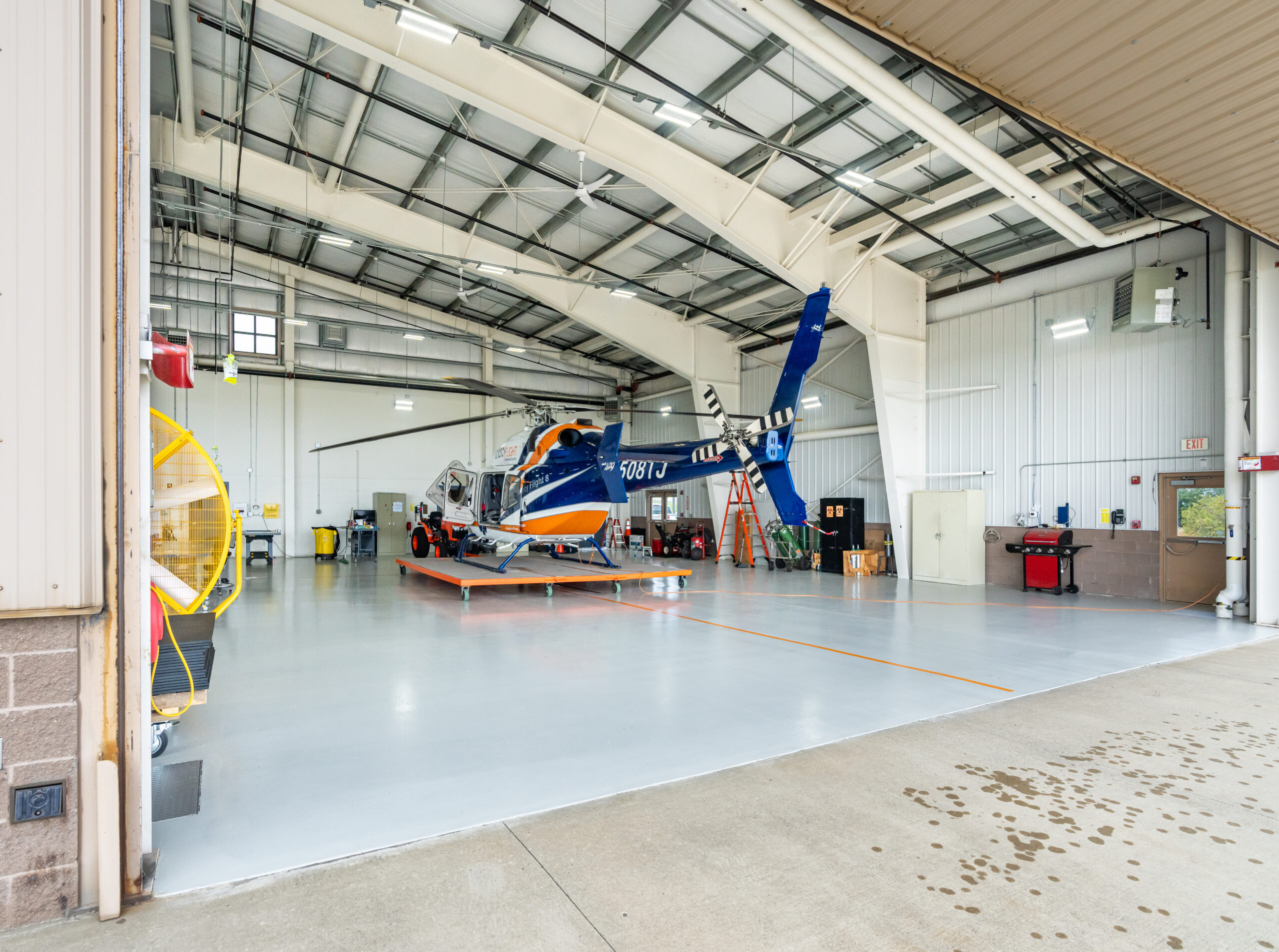
A commercial warehouse floor faces demands that most other floor surfaces do not. Forklifts, pallet jacks, heavy foot traffic, chemical exposure from petroleum products and cleaning agents, and the need to maintain safe, clean working conditions across large areas of concrete all shape what a warehouse floor coating needs to deliver. Choosing the wrong system produces a floor that looks adequate initially but fails under the conditions it was not designed to handle.
Epoxy Plus Flooring Solutions installs professional floor coating systems in commercial warehouses across Michigan and Indiana. Here is a clear guide to what makes a warehouse floor coating perform and which systems deliver the strongest results in demanding commercial environments.
What a Warehouse Floor Coating Needs to Deliver
Before evaluating specific coating systems, it helps to be clear about what a warehouse floor coating is actually being asked to do. Durability under repeated mechanical stress is the primary requirement. Forklift wheels, particularly solid rubber and polyurethane tires running the same paths repeatedly, create significant abrasion and impact loading on the floor surface. A coating system that cannot handle this level of mechanical stress will show wear and de-lamination within months rather than years.
Chemical resistance is the second critical requirement. Warehouses regularly expose their floors to petroleum products from equipment, cleaning chemicals, and in food and beverage operations, acids and organic compounds that standard coatings cannot withstand over time. Slip resistance is a safety requirement, particularly in areas where liquid spills, wet weather tracked in from loading docks, or liquid processing creates traction hazards. And in many commercial operations, the floor must be maintainable with industrial cleaning equipment without the coating degrading under repeated chemical and mechanical cleaning cycles.
Polyurea and Polyaspartic Systems for Warehouse Floors
For most commercial warehouse applications, a polyurea or polyaspartic coating system delivers the strongest combination of the performance characteristics that warehouse environments demand. These systems provide superior abrasion resistance compared to standard epoxy, making them significantly more durable under the repeated mechanical stress of forklift and pallet jack traffic. Their chemical resistance handles the range of substances present in warehouse environments more effectively than epoxy over the same period of exposure.
Cure speed is a practical advantage that matters significantly in commercial operations. Polyurea systems can be ready for forklift traffic within 24 hours of application in most installations. For warehouses where floor downtime has direct operational and financial consequences, this cure speed makes polyurea the realistic choice for facilities that cannot accommodate multi-day shutdowns of large floor areas.
UV stability is less critical in enclosed warehouse environments but matters in facilities with skylights, large loading dock openings, or partial outdoor exposure. Polyurea maintains its color and surface properties under UV exposure where standard epoxy yellows and degrades over time.
Epoxy Plus installs Penntek polyurea systems in commercial warehouse facilities across Michigan and Indiana. Penntek’s commercial coating systems are formulated for demanding environments and backed by a lifetime warranty when installed by certified professionals.
High-Build Epoxy Systems as a Cost-Effective Alternative
For warehouse facilities where budget is a significant consideration and traffic intensity is moderate rather than heavy, a high-build 100 percent solids epoxy system with a polyurea topcoat represents a strong performing and more cost-effective alternative to a full polyurea base coat system.
The polyurea topcoat applied over an epoxy base coat delivers UV stability, chemical resistance, and abrasion resistance that significantly extends the service life of the system beyond what an epoxy topcoat alone provides. For warehouses with primarily foot traffic, occasional light vehicle use, and moderate chemical exposure, this hybrid system handles real conditions effectively at a lower installation cost than a full polyurea specification.
Epoxy Plus assesses every warehouse project and helps clients understand the specific performance tradeoffs between system options before committing to a specification.
Anti-Slip Specifications for Warehouse Safety
Slip and fall incidents are among the most common and costly workplace accidents in warehouse environments. A floor coating that becomes slippery when wet creates genuine safety risk and liability exposure that goes well beyond the cost of the floor itself.
Anti-slip aggregate, fine aluminum oxide or quartz particles broadcast into the topcoat during application, provides measurable traction improvement over smooth floor surfaces in conditions where wet floors, spills, or liquid processing creates hazard. Epoxy Plus specifies anti-slip systems for warehouse applications where safety requirements, the nature of the operation, or regulatory compliance make traction a priority.
The aggregate size and broadcast density can be adjusted to achieve different levels of traction, from a subtle texture that improves grip without significantly affecting the floor’s cleanability to a more aggressive specification for high-risk areas such as loading docks, wash-down zones, and areas adjacent to refrigerated sections.
Preparation at Warehouse Scale
Surface preparation at warehouse scale follows the same principles as any professional floor coating installation but involves different equipment and logistics. Shot blasting is the standard preparation method for large warehouse floors because of its efficiency in covering large square footage and its effectiveness at removing previous coatings, heavy contamination, and surface laitance across expansive areas.
Warehouses frequently present multiple preparation challenges simultaneously including years of oil and forklift fluid saturation, previous coating systems that have failed and need full removal, and areas of concrete deterioration from heavy equipment loading. Epoxy Plus conducts thorough pre-installation assessments of warehouse floors to identify all preparation and repair needs before work begins, ensuring the full scope is understood and priced before any commitment is made.
Phased Installation for Operational Continuity
Large warehouse floors often cannot be taken fully out of service for the duration of a coating installation without significant operational disruption. Phased installation divides the floor into sections that are prepared and coated sequentially, allowing the facility to continue operating in uncoated sections while work proceeds.
Successful phased installation requires detailed coordination between the installation team and the facility’s operational management. Epoxy Plus has experience planning and executing phased commercial installations across Michigan and Indiana warehouse facilities and works with every commercial client to minimize operational disruption while delivering a consistent finished floor across the full area.
Epoxy Plus Serves Commercial Warehouse Clients Across Michigan and Indiana
Epoxy Plus Flooring Solutions is a Penntek Certified Dealer installing professional floor coating systems in commercial warehouses, manufacturing facilities, and industrial spaces across Michigan and Indiana. Every commercial installation is backed by a lifetime warranty and preceded by a thorough assessment of the specific floor conditions and operational requirements of the facility.
Contact Epoxy Plus today by phone (269) 325-9820 for a free estimate and let us help you choose the right system for your floor. You can also check out all of our Google Reviews and additional services.