How Long Does Epoxy Flooring Last?
It is the question that decides whether a floor coating is worth the investment, and the answer people find online is frustratingly vague. Search for how long does epoxy flooring last and you will see numbers ranging from two years to thirty, which is not a range that helps anyone make a decision.
The spread is real, though. It exists because the phrase covers everything from a fifty-dollar kit rolled onto an unprepared garage slab to a professionally installed system over properly ground concrete. Those two floors share a name and almost nothing else.
Epoxy Plus Flooring Solutions installs floor coatings across Michigan and Indiana. Here is an honest breakdown of what determines lifespan and what you can reasonably expect from each type of installation.
How Long Does Epoxy Flooring Last in a Home Garage?
A do-it-yourself kit from a home improvement store typically holds up for one to three years before showing meaningful wear. These products are usually water-based, applied thin, and go down over concrete that has been etched with acid rather than mechanically ground. Peeling at the edges, hot tire pickup where the coating lifts away with a warm tire, and chipping around the garage door are the common failure points.
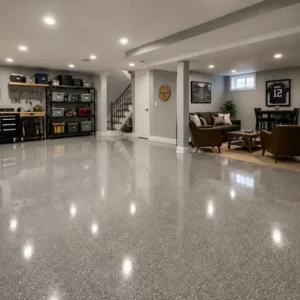
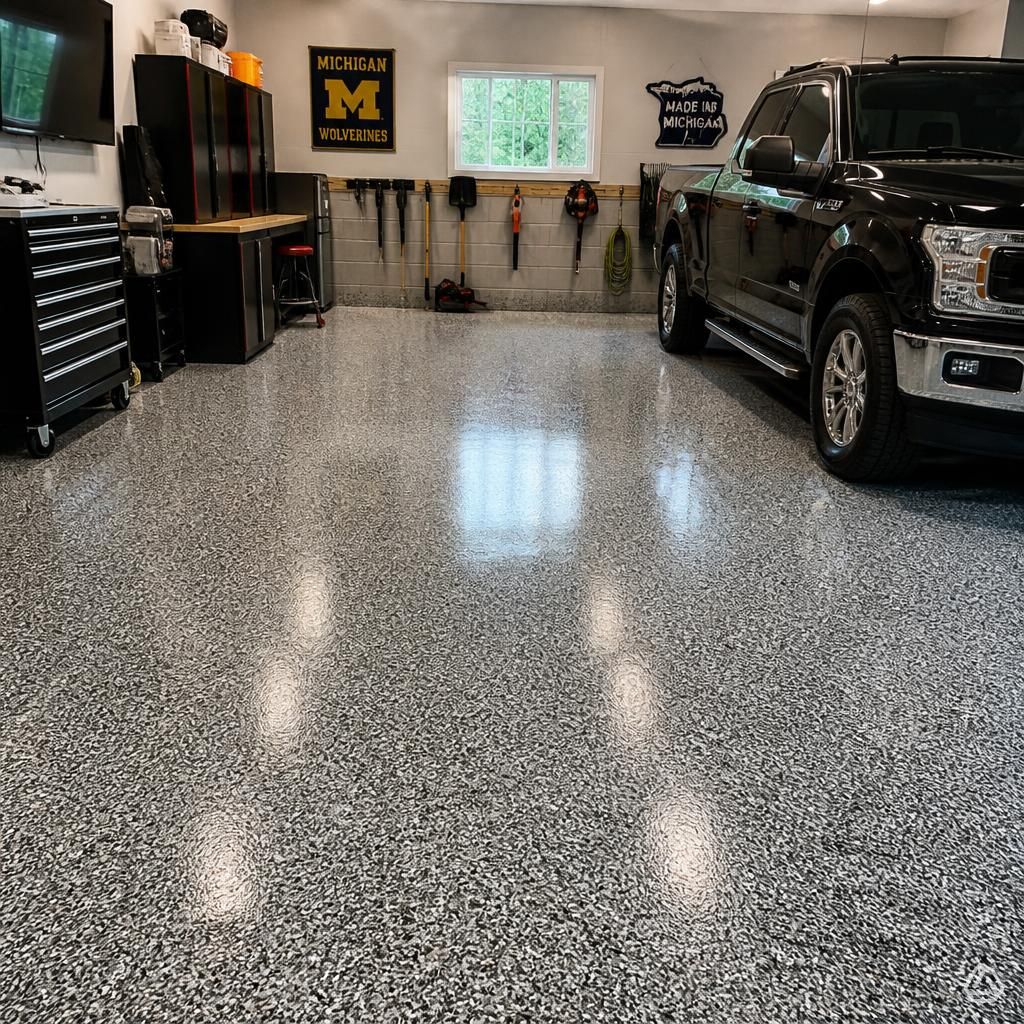
A professionally installed system in the same garage is a different product with a different lifespan. Proper preparation, higher solids content, and a durable topcoat move the expectation into decades rather than years, which is why full-system installations from certified dealers carry warranties that DIY kits do not.
The gap between those two outcomes is not mainly about the resin. It is about what happened to the concrete before anything was poured on it.
Surface Preparation Determines Almost Everything
If there is one thing to take away from this article, it is this: the majority of coating failures trace back to inadequate surface preparation, not to a defective product.
A coating bonds to concrete mechanically, meaning it grips into the microscopic texture of the surface. Smooth, sealed, or contaminated concrete gives it nothing to hold. Acid etching, which is what most DIY kits recommend, opens the surface only slightly and leaves residue behind if it is not neutralized and rinsed correctly.
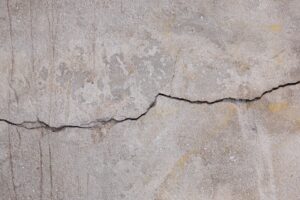
Professional preparation uses diamond grinding or shot blasting to mechanically open the surface to a specified profile. Oil-contaminated areas are treated. Cracks and spalling are repaired rather than coated over. That process takes most of the labor on a job and is the single largest reason a professional floor outlasts a weekend project.
How Long Does Epoxy Flooring Last in a Commercial Space?
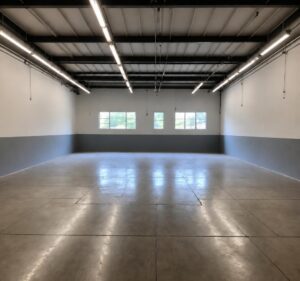
Commercial and industrial floors face forklift traffic, pallet jacks, dropped tools, chemical exposure, and thermal cycling that a home garage never sees. Lifespan there depends heavily on the system specified for the conditions.
A coating chosen for the wrong environment fails early regardless of installation quality. A thin decorative system in a warehouse aisle will not survive steel wheels. A system with the right thickness and chemistry for the actual traffic load can run for many years with only periodic topcoat maintenance.
This is why specification matters as much as installation in commercial work, and why an experienced contractor asks what happens on the floor before quoting a system for it.
Moisture in the Slab Is the Silent Failure
Concrete that sits on grade without an intact vapor barrier moves moisture upward through the slab continuously. When a coating traps that vapor, hydrostatic pressure builds underneath and eventually pushes the coating off the concrete in bubbles or sheets.
This failure looks like a bad product and is not. It is a slab condition that should have been identified before installation through moisture testing, and it is one of the more common reasons a coating fails within a year or two on an older basement or a garage built without proper drainage.
Testing for moisture before coating is a standard part of a professional assessment. Skipping it is one of the shortcuts that separates a cheap bid from a durable floor.
UV Exposure and Color Change
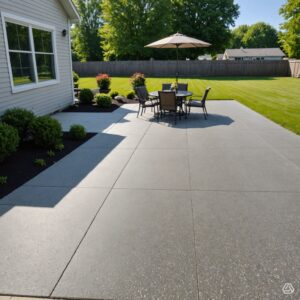
Standard epoxy ambers under ultraviolet light. A floor near a large window, in a garage with the door open much of the day, or on an exterior patio will gradually shift toward yellow. The coating is still protecting the concrete, but it no longer looks the way it did on install day.
This is why topcoat selection matters for any space that sees sunlight. Polyurea and polyaspartic topcoats are formulated for UV stability and hold their color where standard epoxy will not. Penntek’s chip system, which Epoxy Plus installs, is built at 99.5 percent polyurea solids specifically for chemical, abrasion, and UV resistance.
What Maintenance Actually Extends Lifespan
Coated floors are low maintenance rather than no maintenance, and the routine is simple.
Sweep or dust mop regularly, because grit tracked in under shoes and tires is what abrades a topcoat over time. Damp mop with a pH-neutral cleaner rather than harsh degreasers, which dull the finish. Wipe up automotive chemicals reasonably promptly. Put mats under vehicle jack stands and workbench legs where point loads concentrate.
After many years of heavy use, a worn topcoat can often be recoated over the existing system rather than replaced. That is a fraction of the cost of a full installation and resets the surface, which is a meaningful part of why a properly installed floor is a long-term value rather than a recurring expense.
Warranty Is the Honest Answer to This Question
A manufacturer’s warranty tells you more about expected lifespan than any number in a blog post, because a warranty is a financial commitment rather than a marketing claim.
Epoxy Plus Flooring Solutions is a Penntek Certified Dealer, and Penntek backs its concrete coating systems with a limited lifetime warranty. That is not a claim we make about our own work. It is a manufacturer standing behind a product installed by a trained dealer to a specified process, which is a materially different thing from a contractor promising a floor will last.
If a bid you are comparing does not include a manufacturer warranty, that absence is telling you something about expected lifespan.
Get a Straight Answer About Your Floor
The realistic lifespan of a floor in your specific space depends on your concrete, your moisture conditions, your traffic, and the system specified for the job. Those are things we assess in person rather than estimate from a phone call.
Epoxy Plus Flooring Solutions is a Penntek Certified Dealer installing flake, solid color, metallic, polyurea, and concrete polishing systems across Michigan and Indiana, with every installation backed by a lifetime warranty.
Contact Epoxy Plus today by phone (269) 325-9820 for a free estimate and let us help you choose the right system for your floor. You can also check out all of our Google Reviews and additional services.